3rd of September, 2025
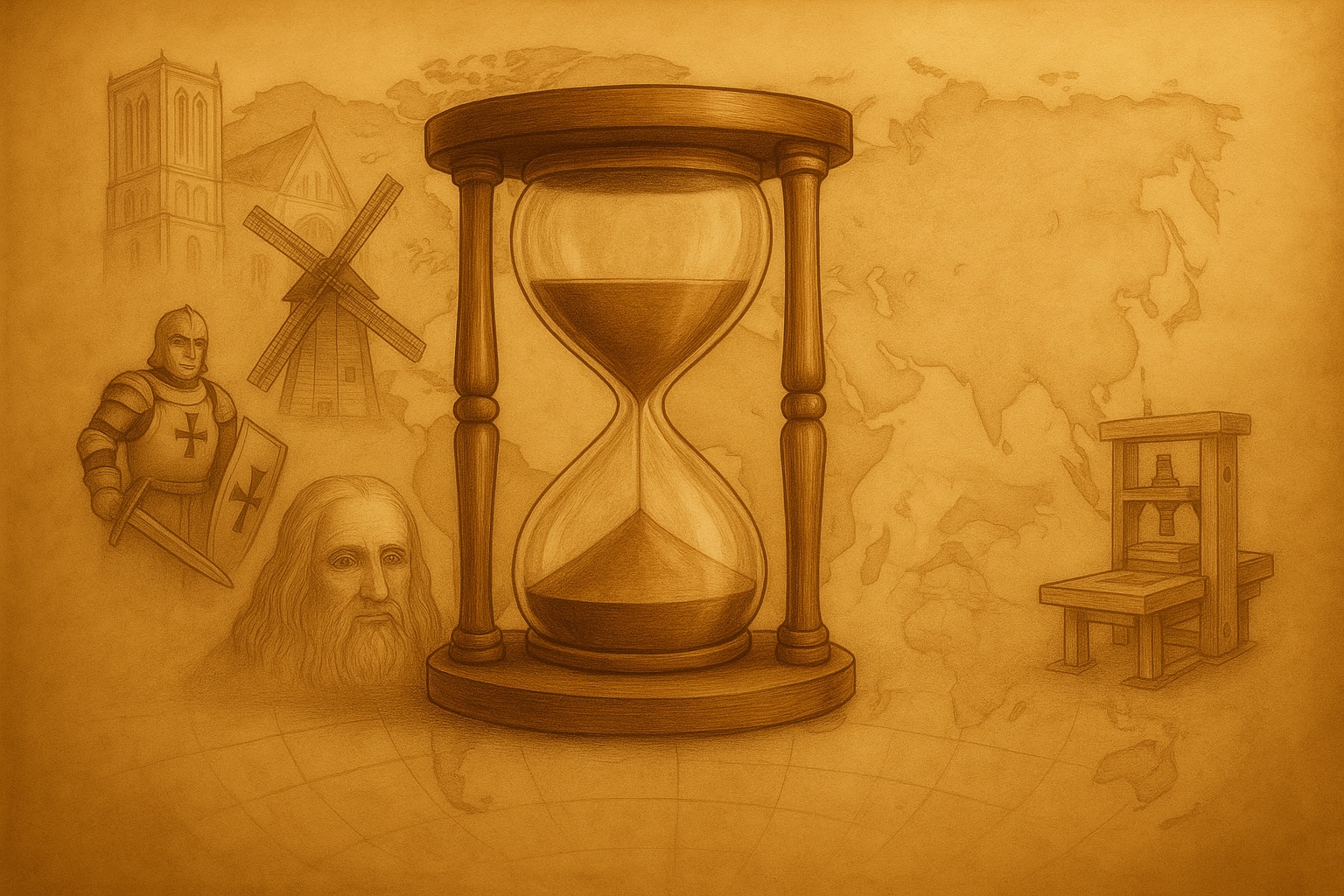
The Serpent’s Flood
In these last days, God will judge the earth with fire, not a flood. Yet there was a flood — this time not from God, but from the serpent.
(If you haven’t yet read the previous articles in our 2025 series, we recommend beginning with them.)
Revelation 12:15 So the serpent spewed water out of his mouth like a flood after the woman, that he might cause her to be carried away by the flood.
The year of this worldwide flood was 2022.
It was deeply personal for me: my hometown — including my church — was submerged by the largest flood in recorded history.
Here are some of the unprecedented floods that occurred that year:
Australia: Eastern Australia’s 2022 floods were among the worst on record. South East Queensland and coastal New South Wales endured their wettest week ever, with more than 50 sites topping 1m of rain. On 28 February, the Wilsons River in Lismore hit 14.4m, shattering the 1954 record of 12.11m.
Pakistan: Monsoon rains left 33 million affected. The Indus River rose to heights unseen in decades, making it one of Pakistan’s deadliest and costliest floods.
China: Southwestern provinces were inundated. Chongqing logged record rainfall, flooding entire districts and testing the Three Gorges Dam.
USA: “1-in-1,000-year” rainfall events struck Eastern Kentucky, St. Louis, North Texas, and Southwest Virginia.
Europe: Record rains swamped Tuscany and Greece, causing fatalities and major damage. In October, storms forced evacuations in Scotland and pushed Denmark’s waters to historic levels.
Africa: Cyclone Freddy set records for cyclone energy. Late-year rains in Kenya brought floods that killed at least 170.
South America: February floods and mudslides in Rio de Janeiro were the deadliest in its history. Bolivia’s Gran Chaco endured unprecedented flooding, Chile’s Atacama Desert flooded for the first time on record, and mid-year rains pushed the Paraguay River to record levels.
Middle East: Lebanon flooded in February from rain and snowmelt. March–April brought rare floods to Damascus and Iraq, while Jordan saw historic flooding in November.
2022 was exceptional for the widespread distribution of severe flooding: multiple continents were affected, hundreds of thousands of people were impacted, and several truly unprecedented local or regional floods occurred. In other regions — Pacific Islands, Central America, Southeast Asia, Israel — floods were severe but remained (just) within historical norms.
From a literal perspective, no other year in recent history embodies the ‘Days of Noah/Revelation 12’ pattern as clearly as 2022 in terms of:
- Global reach: floods struck nearly every continent — Asia, Africa, Australia, Europe, the Americas, and the Pacific Islands.
- Duration: events occurred throughout the year rather than being confined to a single region or season.
- Severity: unprecedented local floods occurred alongside widespread, severe but non-record-breaking events.
The Long Countdown
In Noah’s day, the flood was delayed by the life of Methuselah. God told Enoch, his father, that judgment would not come until Methuselah died — and indeed, the flood arrived the very year he passed (Genesis 7).
Methuselah lived 969 years — longer than any other man recorded in Scripture — as if God was stretching His patience to the utmost. His extraordinary lifespan itself held back the flood.
Jesus explicitly told us that the last days would be like the days of Noah. If we apply the same countdown, counting back 969 years from 2022 brings us to the year 1053. This year is remarkable for several reasons, but one stands out above all.
The Name That No-One Knows
Revelation 19:12 says:
He had a name written that no one knew except Himself.
What is this name? One possibility ties directly to the start of the final countdown and the sending of Elijah the prophet:
Malachi 4:5-6“Behold, I will send you Elijah the prophet before the coming of the great and dreadful day of the Lord. And he will turn the hearts of the fathers to the children, and the hearts of the children to their fathers, lest I come and strike the earth with a curse.”
Jesus is “The Word” — but which word? A word no one knows but Himself. That word is LOVE:
1 John 4:16, 19God is love, and he who abides in love abides in God, and God in him. [...] We love Him because He first loved us.
But does anyone truly know love? The suggestion is that we do not — or would not, were it not for God first loving us. The passage from Malachi speaks of turning hearts — turning them towards love — and this would come first, before Jesus returned.
This is why many things people ask for “in the name of Jesus” do not happen. They need to ask, not in his literal name, but in the name of love.
Here is where the symbolism becomes especially intriguing. In modern “leetspeak,” a playful system where letters are replaced by numbers that resemble them, the word LOVE becomes 1053 (using the Roman numeral for the digit 5). Remarkably, that is the same year the long countdown began, calculated from Methuselah’s 969-year lifespan.
Yet this is only half of what makes the year 1053 remarkable.
The Watershed Moment: Preparing the Way
Prior to 1053, the world had experienced some tough times:
- 476 — Fall of Rome: Western Europe fragments; literacy and infrastructure collapse.
- 500s–700s — The so-called “Dark Ages”: Frequent invasions (Vikings, Magyars, Muslims) and knowledge largely confined to monasteries.
- Late 800s–900s — Viking raids: Successive waves, particularly in Britain, France, and Ireland, intensify instability beyond the general “Dark Ages.”
- 900s — Feudal chaos and papal corruption: The “Iron Century” of the papacy sees weak leadership and widespread instability in church affairs.
One of the most historically significant events of 1053 was the Battle of Civitate, fought on 18 June. This battle was part of the conflict between Pope Leo IX and the Normans in southern Italy. The Normans won decisively, capturing Leo IX. He was treated with respect and was later released.
Pope Leo IX was also active in church reform and in his dealings with Constantinople — developments that contributed to the East–West Schism just a year later, in 1054. The Schism formally and permanently divided Christianity into the Western (Roman Catholic) and Eastern (Orthodox) branches, the culmination of centuries of theological, political, and cultural differences between Rome and Constantinople.
From this point, the Christian world began a long, slow process of recovering and reshaping itself.
We can also trace the opening of the seven seals across this same period. Readers of our earlier article It’s Time You Sleeping Virgins Woke Up! will recall we placed the seals’ opening in the 20th century. That remains true for the final countdown. Yet Scripture often works in layers — wheels within wheels — the same pattern repeating at different scales. What follows is one such larger cycle, stretching across centuries.
The main events leading up to the dawn of the 20th century — the beginning of the last 120 years of the age — show both light and shadow, as the forces of good and evil struggled for mastery.
🔓 First Seal Opened — White Horse — Conquering and to Conquer
- 1053 — Battle of Civitate: Norman victory reshapes southern Italy, mixing Latin, Greek, and Arab traditions — the seeds of the Renaissance.
- 1054 — Great Schism: East–West split forces a redefinition of faith and authority.
- 1066 — William the Conquerer: Wins Hastings, reshaping England and founding the line of monarchs that continues to this day.
🔓 Second Seal Opened — Red Horse — A Great Sword
- 1096–1099 — First Crusade: Capture of Jerusalem.
- 1100s: Monastic reform, first universities.
- 1162–1227 — Genghis Khan: Builds the largest contiguous empire in history.
- 1189–1192 — Third Crusade: Richard the Lionheart vs. Saladin.
- 1202–1204 — Fourth Crusade: Sacking of Constantinople.
- 1215 — Magna Carta: First step toward restraining royal power.
- 1300s: Seeds of the Renaissance in Sicily, Spain, and Italy.
🔓 Third Seal Opened — Black Horse — Scarcity
- 1347–1351 — Black Death: 50–200 million dead. Labour shortages, famine, and cultural upheaval follow.
🔓 Fourth Seal Opened — Pale Horse — Death and Hades
- 1431 — Joan of Arc: Burned at the stake; vindicated posthumously in 1456.
- c.1450 — Gutenberg Press: Knowledge multiplies (cf. Daniel 12:4).
- 1478–1834 — Spanish Inquisition: Enforces Catholic orthodoxy.
- 1492 — Columbus: Opens the “New World.”
- 1517 — Reformation: Luther challenges Rome.
- 1500s — Persecution of reformers: Lutherans, Calvinists, Anabaptists.
- 1553–1558 — “Bloody Mary”: Protestants burned at the stake in England.
- 1572 — St. Bartholomew’s Day Massacre: Thousands of Huguenots slaughtered in France.
- 1600s — Scientific Revolution: Newton and others reshape understanding.
- 1618–1648 — Thirty Years’ War: Religious war devastates Central Europe.
- 1642–1660 — English Civil War: Religious persecution shifts with the tides of power.
The reader will note that we have focused almost exclusively on Christendom — first Orthodox and Catholic, then Protestant — with the Crusades and Mongol invasions providing occasional contact with the wider world. This aligns with Revelation 6:7, which states that the four horsemen were given power over a fourth of the earth. Accordingly, we should not expect to see events of a global scale unfolding in these patterns at this stage of history.
🔓 Fifth Seal Opened — Martyrs Under the Altar: “Rest a Little While Longer”
- 1700s — Age of Enlightenment: Reason, liberty, equality rise.
- Late 1700s — American & French Revolutions: Monarchies shaken.
- 1760–1780 — Industrial Revolution begins: Societies transformed.
🔓 Sixth Seal Opened — Stars of Heaven Fell
- 1833 — Leonid meteor storm: The greatest meteor shower in recorded history.
- Seen at the time as the fulfilment of Revelation 6:13.
- Radiated from Leo (the Lion) — a heavenly sign pointing to the King.
New York Observer, November 1833No philosopher or scholar has told or can tell the cause of this phenomenon. It has never occurred before, and it may never occur again. He who knows that the stars of heaven shall fall, can alone explain this display. It is a sign, a sign of the last days, a sign of the fulfilment of prophecy — a sure harbinger of that great and dreadful day.
Denison Olmsted (Yale professor), 1834The stars fell ‘even as a fig tree casteth her untimely figs, when she is shaken of a mighty wind.’ Never did rain fall much thicker than the meteors fell towards the earth… It seemed as if the whole starry heavens had congregated at one point near the zenith, and were simultaneously shooting forth, with the velocity of lightning, to every part of the horizon; and yet they were not exhausted — thousands swiftly followed in the tracks of thousands, as if created for the occasion.
🔓 Seventh Seal Opened — Silence in Heaven
- 1830s–1840s: The apostasy that precedes the revealing of the Antichrist begins.
- Religious: Early stirrings of liberal theology in Europe; some German theologians question traditional biblical authorship. Regular church attendance around 80%.
- Social/Technological: Railways begin spreading — first commercial steam trains (Stephenson, 1825–1830s). Increased travel begins to shrink distances (cf. Daniel 12:4).
- Cultural: Geology and early evolutionary ideas challenge literal interpretations of Genesis.
- 1850s–1860s:
- Religious: Darwin publishes On the Origin of Species (1859), sparking debate over evolution and biblical literalism. Regular church attendance around 70%.
- Social/Technological: Steamships and rail networks expand internationally; telegraph networks begin connecting continents.
- Cultural: Industrialisation accelerates urbanisation, weakening traditional rural church structures.
- 1870s–1880s:
- Religious: Higher criticism spreads; liberal theology becomes organised in seminaries. Regular church attendance around 60%.
- Social/Technological: International travel and communication accelerate; newspapers and journals circulate widely.
- Cultural: Secular philosophies and scientific naturalism gain prominence in public life.
- 1890s–1900s:
- Religious: Social Gospel movement emphasises ethics and reform over doctrinal orthodoxy; denominational splits increase. Regular church attendance around 55%.
- Social/Technological: Automobiles, expanded rail networks, and early electric trams enhance mobility.
- Cultural: Literacy and public education expand rapidly; knowledge spreads more widely than ever.
- 1900s–1910s:
- Religious: Modernist vs. fundamentalist debates intensify; liberal theology dominates many mainline churches. Regular church attendance around 50%.
- Social/Technological: Early air travel experiments; global communication networks (telegraph, radio) expand.
- Cultural: Secularism spreads; skepticism toward traditional Christian authority grows.
This entire timeline encompassing the opening of all seven seals shows history’s jagged but steady movement upwards — preparing, shaping, and making straight the way of the Lord — until the fullness of His kingdom should come.
Summary of progress:
- Within 50 years: Crusades, universities, flourishing trade.
- Within 200 years: Renaissance roots, Magna Carta.
- Within 500 years: Printing press, Reformation, discovery of the New World.
- Within 800 years: Scientific Revolution, Enlightenment, American & French Revolutions, Industrial Age.
The Coming Kingdom
When Jesus returns, there will be a millennium of peace, but it will be built upon the foundation of the millennium that preceded it. This is an example of chiastic balance, echoing His first coming, although the individual ministries of John the Baptist and then Jesus were of much shorter duration the first time.
Jesus Himself likened His kingdom to a mustard seed, which would grow into a great tree, and to leaven in dough. These images suggest a gradual unfolding rather than an instant takeover. Many Christians — particularly those who anticipate a “Left Behind”–style rapture — have misunderstood this. The kingdom they are waiting to see appear is already present, though it is still engaged in battle against the forces of darkness. When Jesus returns, the darkness will be removed, and those in His kingdom will shine forth, just as the parable of the tares describes (Matthew 13:37-43).
We’ve now covered the two main prophetic countdowns that lead to the times of the end — a long count of 969 years and a shorter count of 120 years — and both markers — when aligned with observed historical events — demonstrate clearly that we are closer to the end than most realise. Those still waiting for a literal fulfilment of these events are misunderstanding the purpose of prophecy. To reiterate: prophecy is not primarily about predicting what will happen or when; it is about revealing the Author of the prophecy after the fact. And for those with eyes to see and ears to hear, it most certainly has!
There is still much prophetic material to explore. At this point in our series, we have established a solid framework that will hopefully allow others to flesh out some of the details themselves. In our next article, we will examine another aspect of the final 120 years — pertaining to the Antichrist — and offer one possible interpretation of the number 666.
The challenge with delving too deeply into different prophecies now is that they are still, for the most part, like individual puzzle pieces. While we have laid out many of the edges, we do not yet have a clear picture of the finished puzzle. Our following articles will address this by going back further and showing the reader what the picture on the box looks like.
See Also: