30th of August, 2025
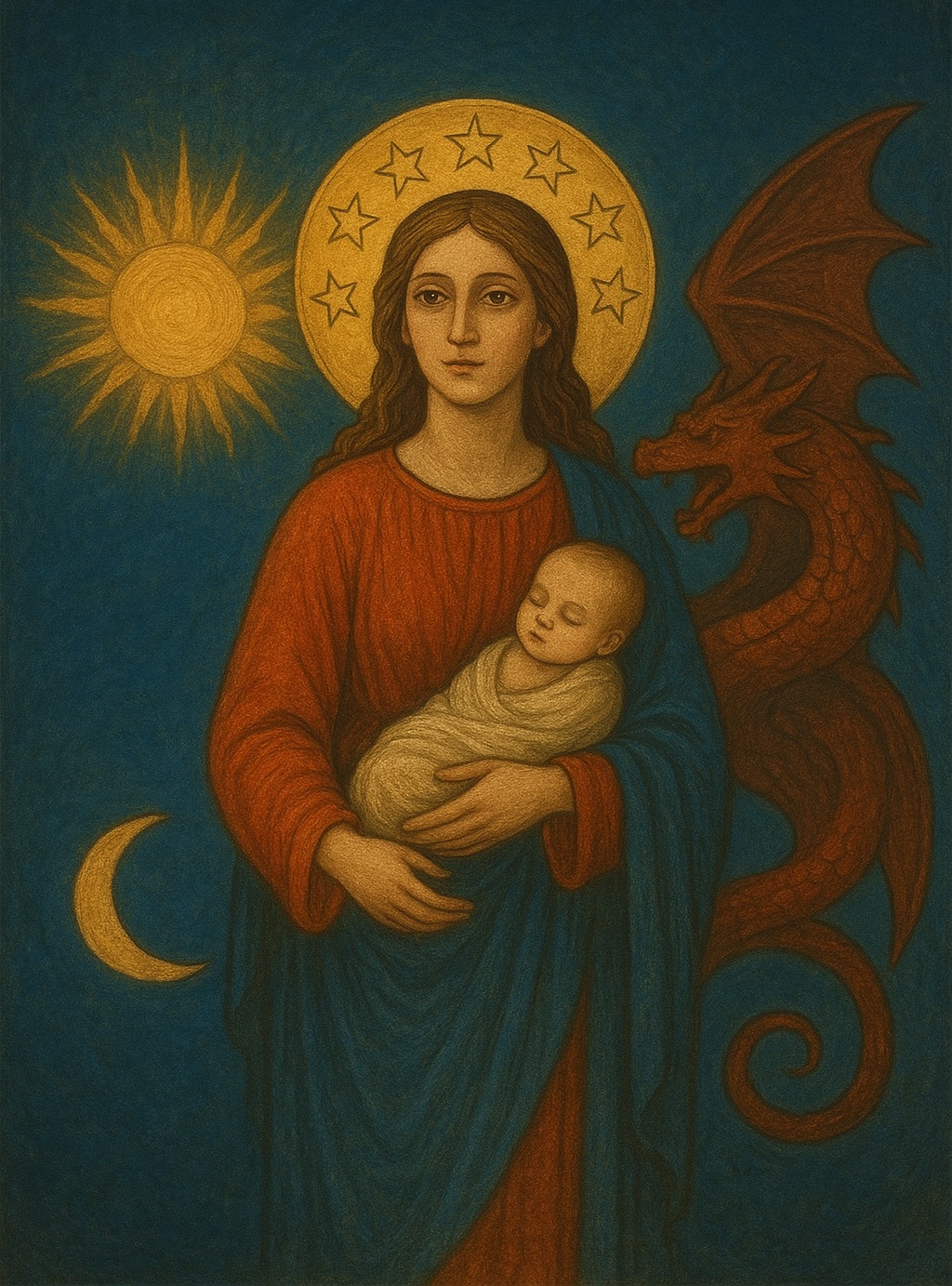
Balance
This is the second article in our 2025 series, and it builds on the first. If you haven’t read that one yet, we recommend starting there.
In that article, we introduced the concept of balance and noted that it would be a recurring theme. Revelation 12 is the epitome of balance. It is arranged as a chiasm: the first half of the passage (verses 1–10) is mirrored in the second half (verses 12–17), centred on a single theme (verse 11):
Revelation 12:11And they overcame him by the blood of the Lamb and by the word of their testimony, and they did not love their lives to the death.
Not only is Revelation 12 structured as a chiasm, but the entire book of Revelation is also chiastic, with — you guessed it — Revelation 12 at its centre. For example, just before Revelation 12 we see the two witnesses, and just after it, the two beasts. Before the witnesses come the 144,000 and the seven trumpets; after the beasts come another 144,000 and the seven bowls. Those are just two of many parallels.
Many readers will also be aware that the whole Bible is chiastic, with themes from Genesis mirrored in Revelation. For instance, Genesis begins with the heavens and the earth; Revelation ends with a new heaven and a new earth. Early in Genesis we see the Tree of Life, which reappears at the end of Revelation in the New Jerusalem.
And at the very centre of the Bible’s balance — the cross.
The New Jerusalem
Returning to Revelation 12, we see its chiastic structure reflecting the principle of “as above, so below” (or perhaps, as Matthew 16:19 and 18:18 suggest, “as below, so above”). The first half speaks of heaven above; the second half, of earth below.
In this context, “heaven” refers to the spiritual, and “earth” to the physical. The division mirrors two groups: above, heaven represents the church — the spiritual bride, “the Jerusalem above” who is the mother of us all; below, earth represents the physical bride — the descendants of Abraham, Isaac, and Jacob. These two are elsewhere symbolised as two groups of 144,000: one from the physical sons of Israel, the other from the spiritual followers of Jesus.
Thus, the woman is both Israel (the people chosen through Abraham’s line) and the church (the bride of Christ, the heavenly Jerusalem). The imagery of sun, moon, and twelve stars recalls Joseph’s dream in Genesis 37:9-10, where they clearly symbolise Jacob, Rachel, and the twelve tribes. Thus, the woman first represents Israel, God’s first covenant people.
Yet she is clothed with the “sun” — or read another way, the “Son” — Christ. The moon under her feet points to the bride taken from her body, as Eve was taken from Adam’s. The twelve stars also echo the twelve apostles, the foundation on which the new covenant people are built.
Revelation 21 identifies this woman as the heavenly city, the “mother of us all” (Galatians 4:26). She embodies both the redeemed of Israel and the redeemed of the nations, joined as one bride.
But to truly see the New Jerusalem, we need to mirror it — to turn it upside down. The woman (bride / moon) is placed above; the twelve foundations are below. Jesus is both the cornerstone and the capstone — the one who laid the foundation and who will finish it with the bride, as Zechariah 4:6–10 foretells.
Many assume the New Jerusalem is a cube, but a cube has no capstone. A pyramid does. And when viewed this way, the picture of the New Jerusalem becomes strikingly familiar.
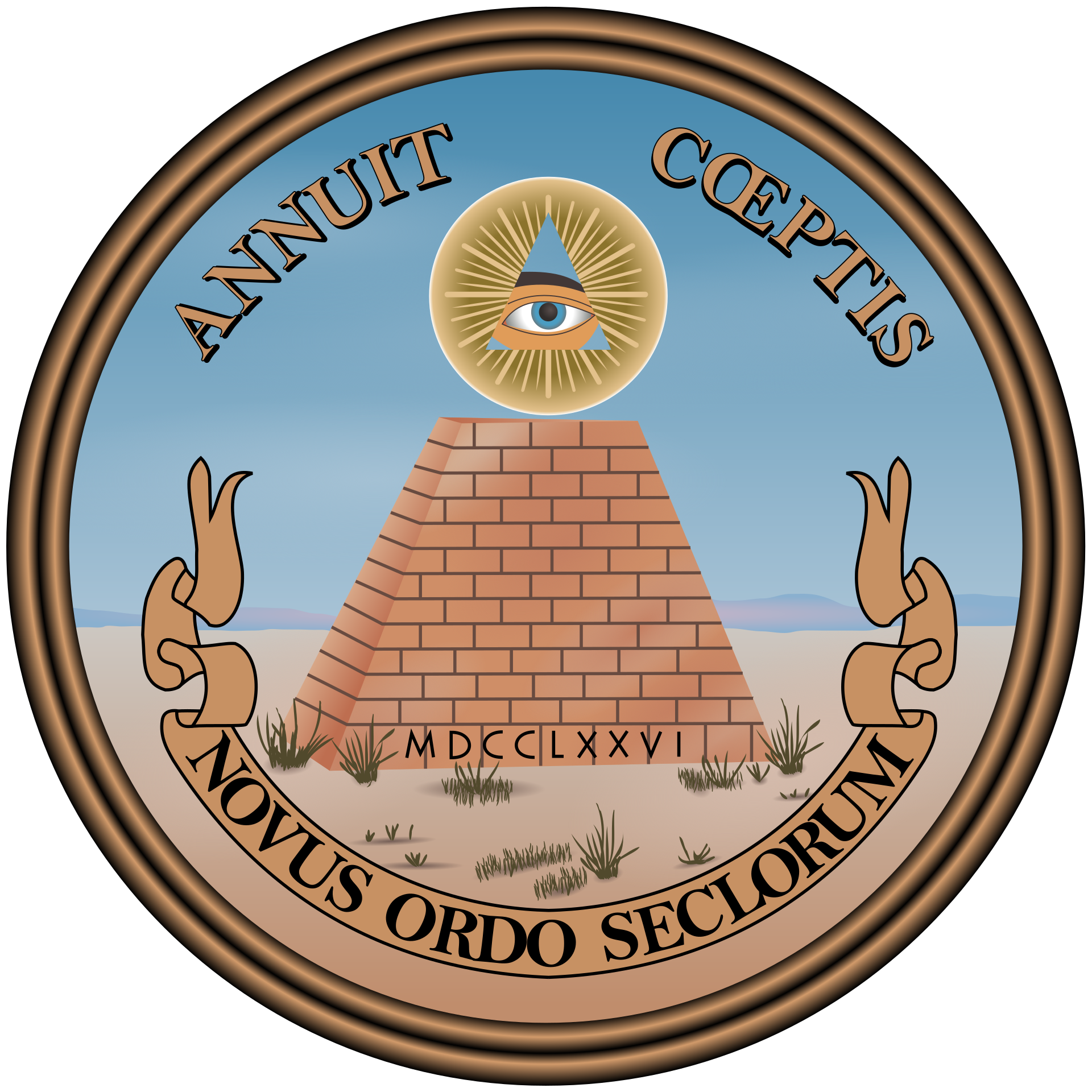
This is the reverse of the Great Seal of the United States. At its base lies the cornerstone, above which are twelve steps representing the apostles. At the summit rests an eye — the Lamb with seven eyes (Zechariah 4:10; Revelation 5:6). The eye is encircled by what is officially called a “glory.” Paul tells us in 1 Corinthians 11:7 that “woman is the glory of man,” and in Ephesians 5:32 he reveals the “great mystery” — that he is speaking of “Christ and the church.”
Thus the whole structure symbolises the New Jerusalem: the heavenly Mount Zion, the throne room of heaven (Hebrews 12:22). And at the top stands Christ with His bride — the 144,000 who “follow the Lamb wherever He goes” (Revelation 14:1–5).
We’ve called the central theme a mirror, but when viewed with this lens we should call it by the same name the Bible uses — a sea of glass.
Revelation 4:6Before the throne there was a sea of glass, like crystal.
This is just a tiny taste of things we’ll be digging into in much greater detail in later articles.
The Universal Language
The layered symbolism of the woman in Revelation 12 — both Israel and the church — becomes particularly clear in English, where sun (her covering) and Son (Christ) are homophones. This linguistic coincidence (not really a coincidence) allows the secondary meaning, the church as the bride of Christ, to shine through.
This brings us to an essential hermeneutic: prophecy is meant to be read in English. God confused the languages at Babel, yet Zephaniah 3:9 says He will “restore to the peoples a pure language.” And He has.
When John heard Jesus speak, he described His voice as “like the sound of many waters” (Revelation 1:15). Perhaps it sounded like a babbling brook. In English, “babbling” can mean both running water and talking, and the word babble evokes Babel — though not etymologically. God has left these breadcrumbs for us to find our way back to truth.
Here’s another example: the first beast in Daniel 7:4 is described as a “lion with eagle’s wings.” In English, it could also be read as a “line with eagle’s wings,” which, when drawn, resembles a cross. Jesus, the Lion of the tribe of Judah, came as a man and was lifted up from the earth on a cross.
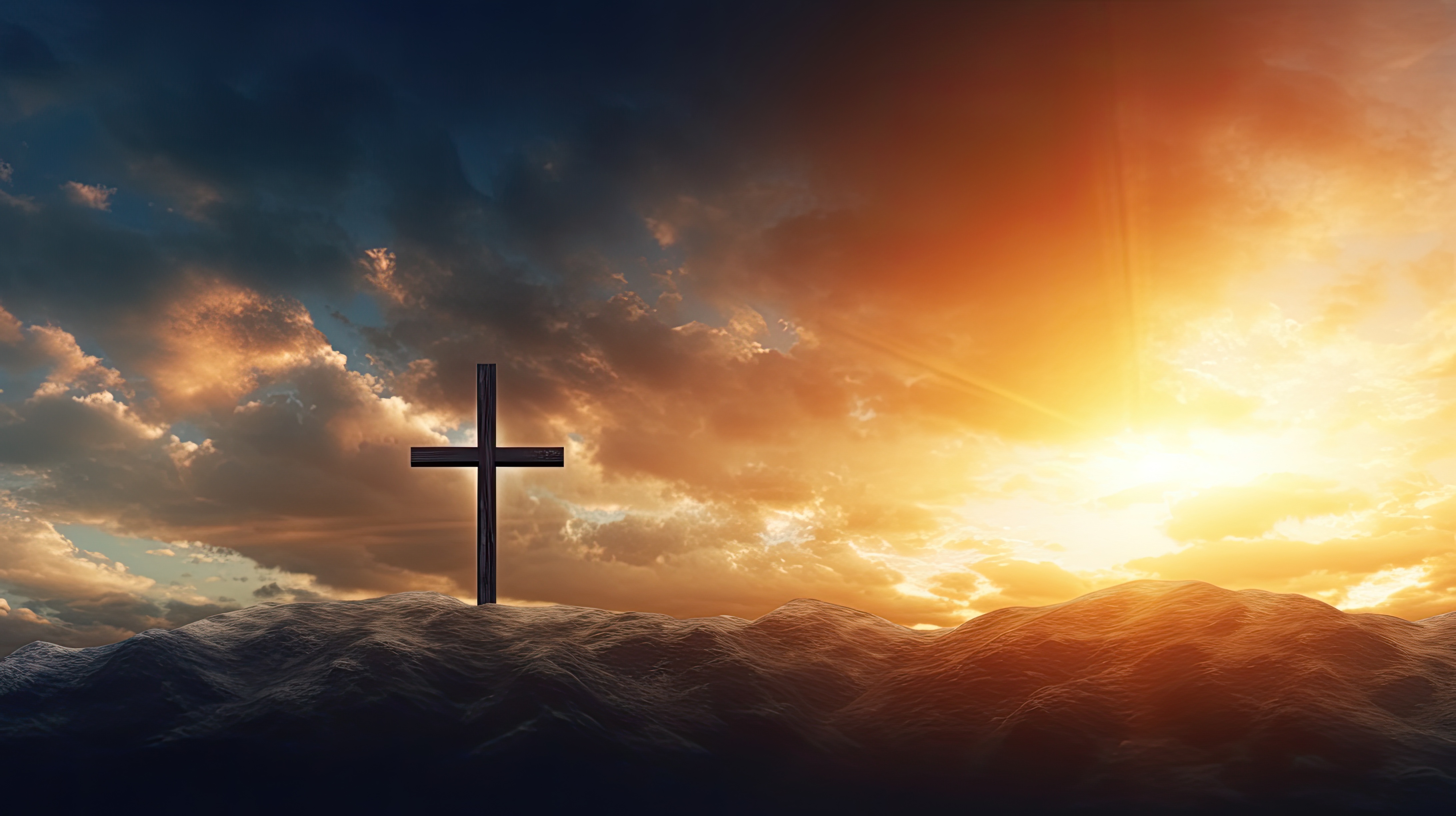
A “line” with eagle’s wings Sky Stock photos by Vecteezy
This illustrates how English can unlock secondary or hidden meanings in prophecy, adding an extra dimension to symbolic interpretation.
Of course, this is not the only interpretation of Daniel 7:4. Other layers exist and will be explored in future articles. The key is to avoid seeking a single, fixed answer. Prophetic symbols are rarely mutually exclusive; they often carry multiple, complementary meanings. Prophecy is structured like “wheels within wheels,” revealing God’s signature across time, space, and language.
God’s signature is woven into creation and history — in symbols, numbers, language, and events. Recognising these patterns allows us to see the careful balance and design underlying all prophetic revelation, and ultimately points to the source: God Himself, the author of creation. Every symbol, number, and language layer reflects His intentional design and divine authorship.
The Male Child
In the next article, we’ll explore the male child — and it should come as no surprise that there are two of them as well: one spiritual, one physical. We’ll also tie this into the 120-year framework introduced in the previous article.
Here’s a small foretaste: the 1,260 days above the mirror correspond to 1,260 months — or 105 years — below it. This aligns remarkably well with our 120-year structure. In fact, it fits so neatly that after reading the next article, you might start to suspect it was all planned in advance!
See Also: